
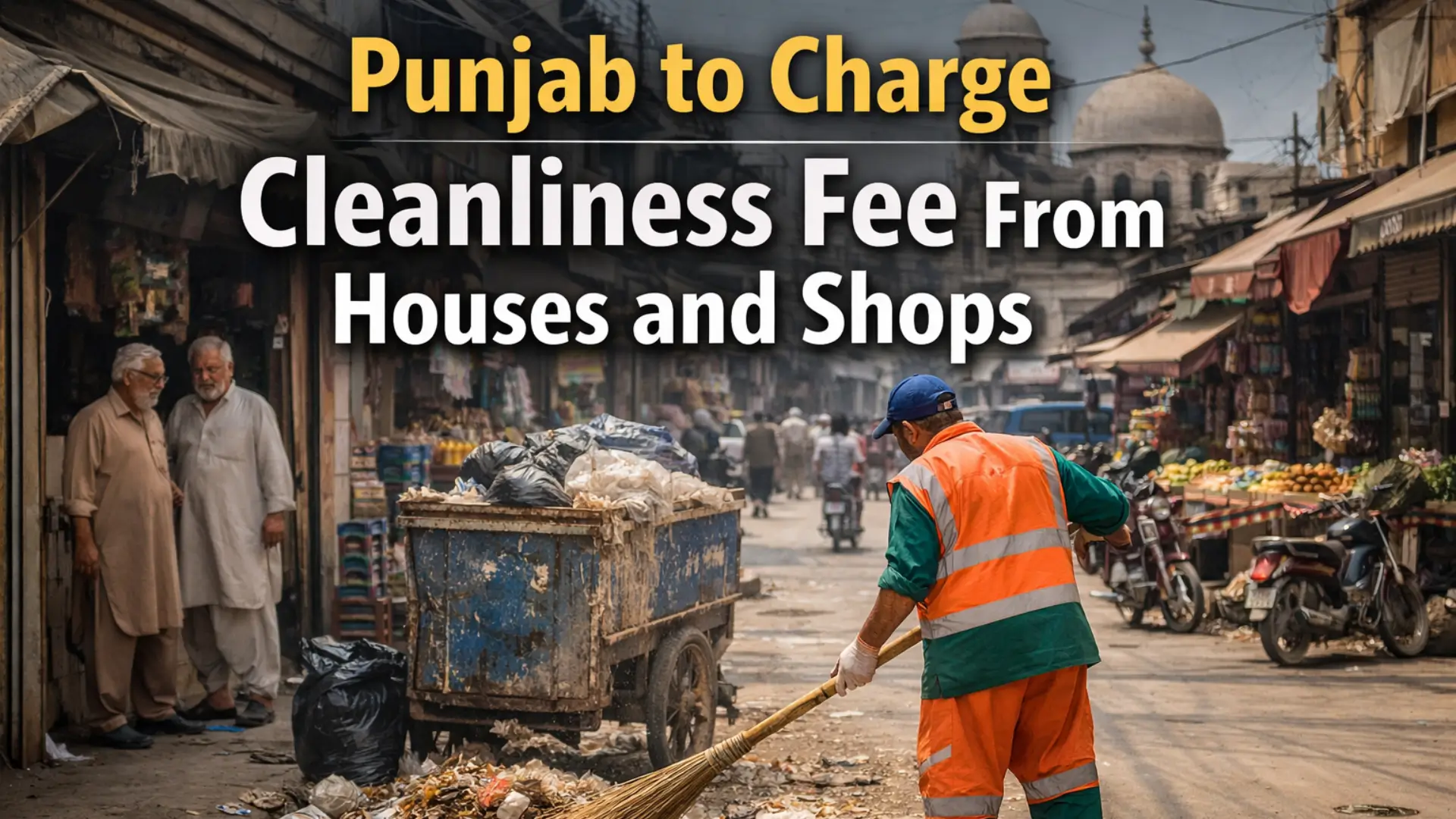
Punjab to Charge Cleanliness Fee From Houses and Shops. The Punjab government has finalized a new cleanliness fee that will be charged from houses, shops, and businesses in both urban and rural areas. The decision was announced this week as part of a broader plan to improve sanitation services and generate funds for waste management. The government expects the move to raise around Rs68 billion annually, making it one of the largest province-wide sanitation funding initiatives in recent years.
What the Decision Is About and Why It Matters

According to officials, the new fee aims to strengthen cleaning systems, improve waste collection, and maintain public hygiene across Punjab. Rapid urban growth and rising waste levels have placed heavy pressure on existing sanitation services. Authorities say the new revenue will help local bodies manage these challenges more effectively.
The policy affects almost all property owners, including homeowners, shopkeepers, and commercial enterprises. Charges vary based on property size, location, and business category.
Cleanliness Fee for Urban Areas
In cities and towns, residential properties will pay monthly fees based on house size.

For houses:
Five marla houses will pay Rs300 per month.
Ten marla houses will pay Rs500 per month.
Twenty marla houses will pay Rs1,000 per month.
Houses between 20 marla and one kanal will pay Rs2,000 per month.
Properties larger than 40 marla will pay Rs5,000 per month.
Commercial properties in urban areas will also contribute based on business size.
Small businesses will pay Rs500 per month.
Medium businesses will pay Rs1,000 per month.
Large businesses will pay Rs3,000 per month.

Officials say this tiered system ensures that larger properties and higher-earning businesses contribute more to sanitation costs.
Cleanliness Fee for Rural Areas
The charges for rural areas are lower, reflecting income levels and property values outside cities.
For houses:
Five and ten marla houses will pay Rs200 per month.
Properties above ten marla will pay Rs400 per month.

At this stage, the government has not announced separate rates for rural commercial units.
How the Funds Will Be Used
The Punjab government says the estimated Rs68 billion collected each year will be used to upgrade waste disposal systems, improve street cleaning, support landfill management, and ensure regular sanitation services in both urban and rural communities. Officials argue that without a stable funding source, local governments struggle to keep public spaces clean.
The move also aligns with broader efforts to improve public health, reduce pollution, and enhance the quality of life for residents.

Implementation Status and Next Steps
Although the fee structure has been finalized, the government has not yet issued the official notification. The notification will confirm the start date, collection method, and enforcement mechanism. Once issued, local authorities will begin charging the cleanliness fee from property owners.
Public Impact and Reactions
The decision is likely to affect household budgets and business operating costs. Supporters say better sanitation will benefit everyone, while critics argue that the new charges add financial pressure during difficult economic conditions. The government maintains that the fees are necessary to sustain essential public services.
FAQs About Charge Cleanliness Fee From Houses and Shops
When will the cleanliness fee be charged?
The fee will start after the official government notification is issued.

Who has to pay the cleanliness fee?
All residential and commercial property owners in Punjab will be required to pay.
Does the fee apply to both cities and villages?
Yes, the policy covers both urban and rural areas, with different rates.
Why are urban charges higher than rural charges?
Urban areas generate more waste and require higher sanitation costs.
Can the fee rates change in the future?
Yes, the government may revise rates based on service needs and revenue targets.
Conclusion
The new cleanliness fee marks a major shift in how sanitation services are funded in Punjab. By linking charges to property size and business type, the government aims to create a sustainable system for waste management and public cleanliness. The success of the policy will depend on transparent implementation and visible improvements in sanitation services once collections begin.